

AI Insurance Claim Denials in Michigan No-Fault (2026)
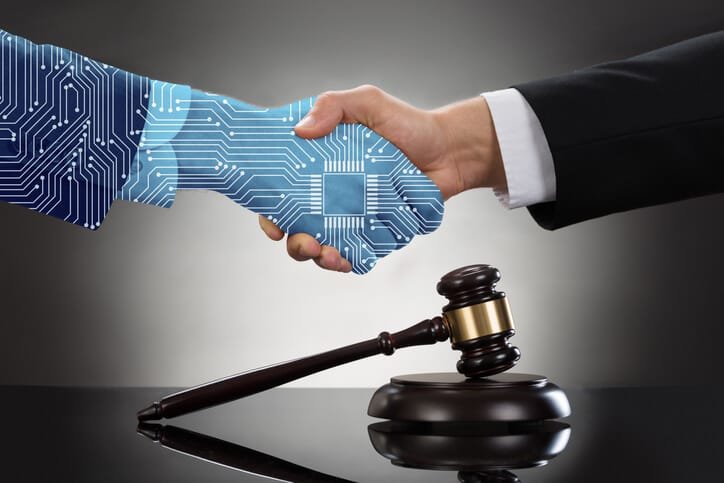
Auto insurers are increasingly deploying machine-learning models that score Michigan PIP claims, flag suspected exaggeration, and push borderline files toward denial faster than a human adjuster ever could. State regulators and consumer-protection lawyers are catching up. Federal litigation targeting health insurers for AI denial algorithms with high error rates shows where Michigan auto claims may be heading under the Uniform Trade Practices Act and the attorney-fee provisions of MCL 500.3148.
The Viral Hook in 2026
Social media is full of claimants who received a denial letter that reads like a template, followed by a request for additional documentation that reads like another template. Industry insiders confirm that many major auto carriers now route PIP claims through triage models before a human reviewer sees the file. The model assigns a risk score. High scores get fast-track denials. Low scores get paid. Medium scores get document requests that delay payment without formally denying.
In early 2026, a federal judge ordered a major health insurance conglomerate to disclose broad records surrounding its AI denial tool following allegations that the tool’s denial recommendations were overturned at very high rates on appeal. While that litigation involves health insurance rather than auto PIP, the core issue — algorithms overriding human judgment to deny valid claims — is directly relevant to Michigan no-fault claim handling.
What MCL 500.3148 Already Requires
Michigan no-fault has a built-in attorney-fee mechanism that targets exactly this conduct. MCL 500.3148(1) entitles a PIP claimant to attorney fees when the insurer unreasonably refuses to pay or unreasonably delays payment of overdue benefits. Pirgu v United Services Automobile Association, 499 Mich 269 (2016), set the multi-factor test for what counts as a reasonable fee once entitlement is found.
An AI model that produces a denial decision the insurer cannot defend on the underlying record looks like the textbook case of unreasonable denial. The fact that a machine generated the initial recommendation does not insulate the carrier. The carrier is liable for the conduct of its claim-handling system, whether that system is a person or a model.
The controlling Michigan rule: Under MCL 500.3142, PIP benefits are overdue if not paid within 30 days after the carrier receives reasonable proof of the fact and amount of loss. Under MCL 500.3148(1), attorney fees are available when an insurer unreasonably refuses to pay or unreasonably delays payment of those overdue benefits. An AI-driven denial that cannot be defended on the underlying medical and factual record is the exact pattern the statute is built to police.
The Uniform Trade Practices Act Overlay
Beyond MCL 500.3148, the Michigan Uniform Trade Practices Act at MCL 500.2001 et seq. prohibits unfair claim-settlement practices. MCL 500.2026 lists conduct that constitutes an unfair claim-settlement practice when committed with such frequency as to indicate a general business practice. Several listed practices map directly onto algorithmic claim handling: failing to acknowledge claims promptly, refusing to pay without conducting a reasonable investigation, failing to affirm or deny coverage within a reasonable time after proof of loss, and failing to settle claims promptly when liability is reasonably clear.
The Trade Practices Act is generally enforced by regulators rather than through a direct private damages action by an individual claimant. But it still matters: a carrier whose AI model produces a denial rate dramatically out of step with industry medians on similar claims invites a market-conduct examination by the Department of Insurance and Financial Services (DIFS). The exam can result in consent orders, corrective-action plans, and fines.
What Claimants Should Preserve
Two records become unusually valuable in an AI-denial case. The first is the carrier’s complete claim file, including any algorithmic risk scores, model outputs, and notes by the human reviewer who acted on the model’s recommendation. Michigan discovery rules give a claimant access to those records when the file is in suit. Carriers will resist on trade-secret grounds; courts can compel production under protective orders.
The second is the timeline of the claim itself. AI-driven denials often pattern as a fast initial response, an extended document-request phase, and a single denial letter once a deadline runs. A clean timeline showing the carrier had reasonable proof of loss for more than 30 days before denial supports the MCL 500.3148 unreasonable-delay theory even without access to the model.
Practical Posture for 2026 PIP Claims
Claimants who suspect their PIP denial was AI-driven do not need to prove the existence of the model to recover. They need to prove the denial was unreasonable on the record the carrier actually had. The model is corroborating evidence at best. Building the case the traditional way — with medical records, treating-provider testimony, properly itemized bills, documented wage loss, and a clean documentation trail — remains the path that produces verdicts and consent judgments. The AI angle is a litigation lever, not a substitute for proof of the underlying claim.
RELATED KNOWLEDGE BASE ARTICLES
AI Chatbots Posing as Lawyers: Michigan UPL Risk · Michigan Motorcycle Accidents: No-Fault PIP Priority · Serious Impairment Threshold After McCormick
Frequently Asked Questions
How do I know if my PIP denial was AI-driven?
You usually cannot tell from the denial letter itself. Signs include unusually fast initial response (sometimes within hours of submission), boilerplate document-request language, denial timed to coincide with the 30-day overdue threshold, and refusal to point to a specific provider note or examination report supporting the denial. In litigation, your attorney can seek the claim notes and any algorithmic outputs.
Does MCL 500.3148 still apply if the carrier reverses on appeal?
It may. The question is whether the insurer unreasonably refused or delayed payment when payment was due. Reversal after the 30-day overdue window has run does not automatically erase the original unreasonable denial. The unreasonableness inquiry looks at the conduct at the time of the decision, not the conduct after the lawsuit.
Can I see the AI model that denied my claim?
Possibly, and usually only in litigation. Your attorney can move to compel production of the algorithmic outputs and the underlying model documentation. Carriers will assert trade-secret and proprietary-system defenses. Most Michigan trial courts have allowed production under protective orders that limit disclosure to counsel and experts. The model is not always necessary to win, but it can establish patterns useful for class or multi-plaintiff actions.
What is DIFS doing about AI claim handling?
The Department of Insurance and Financial Services regulates unfair claim-settlement practices and receives consumer complaints. Its market-conduct examination program already reaches algorithmic claim handling under MCL 500.2026, even without a bulletin specific to AI. A claimant whose denial fits a documented pattern can submit a market-conduct complaint that adds to the regulatory file.
Is a class action possible?
Possible but procedurally difficult. PIP claims under MCL 500.3148 are usually individual because reasonableness depends on the specific claim file. A pattern-and-practice case against an insurer based on a uniformly applied AI denial system could potentially meet Michigan class certification standards under MCR 3.501, but it would need enough commonality to overcome individual-reasonableness defenses. Federal AI-denial class actions pending in 2026 are worth watching as this area develops.
Have a question about this area of Michigan law?
Free, confidential review with Manny Chahal. Consultations available in English, Hindi (हिंदी), and Punjabi (ਪੰਜਾਬੀ).
Call 1-844-MCHAHAL for a free case evaluation